Table of Contents
Wind-Resistant Trees in Louisiana: Choosing the Right Species for Storm Season
Wind-resistant trees in Louisiana are essential for minimizing storm damage during hurricane season. Selecting the right species involves evaluating three primary characteristics: deep root systems that anchor the tree firmly in saturated soils, flexible wood such as that found in live oak and bald cypress that bends rather than breaks in high winds, and strong branch attachments with wide crotch angles that resist tearing. Native species typically outperform non-natives because they are adapted to our regional climate and weather patterns. For a complete list of storm-hardy species suitable for your property, refer to the USDA tree planting resources. As part of hurricane season tree preparation, we recommend a hazard tree assessment to identify weak branches or shallow-rooted trees that could become dangerous.
1. Live Oak – The Wind-Resistant Champion
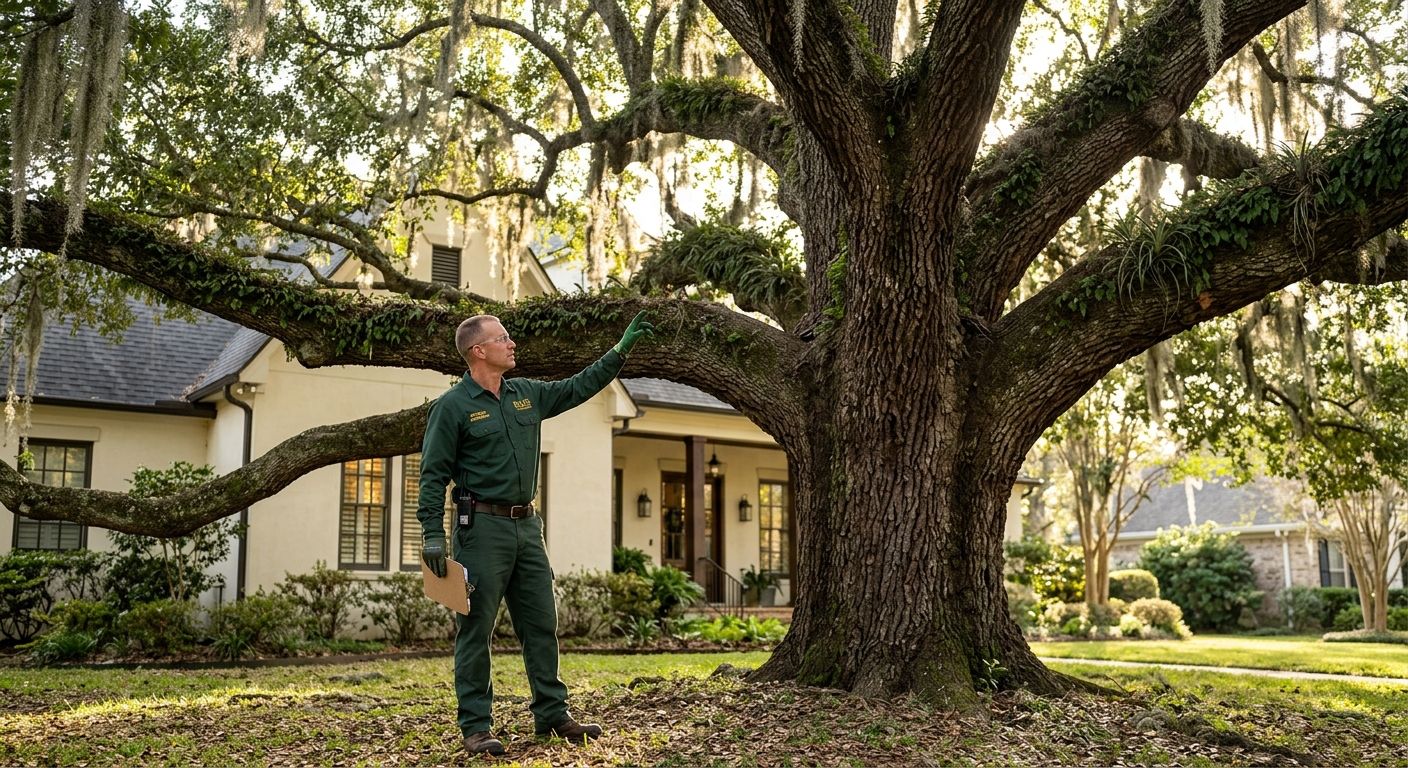
When considering wind resistant trees Louisiana landscapes demand, the Live Oak (Quercus virginiana) stands apart. Its interlocking wood grain resists splitting, while a deep, extensive root system anchors it firmly against uprooting. A low, spreading canopy allows wind to pass over rather than push against a tall crown, making this native southeastern species highly wind-resistant and well-adapted to our humid subtropical climate.
Planting a Live Oak is a proactive step in hurricane season tree preparation. At Miller Tree Service, we have observed for over 40 years how these trees perform across Northwest Louisiana. Even so, periodic hazard tree assessment remains essential—regular pruning removes dead or weak limbs before storms arrive, preserving the tree’s natural resilience. We recommend annual inspections after major storms for added safety. While the Live Oak is a remarkable choice, several other trees also offer outstanding wind resistance.
2. Bald Cypress – Root System Strength
One of the most resilient native species is the Bald Cypress, a standout among wind resistant trees in Louisiana because of its exceptional root system architecture. The tree develops a deep central taproot that often extends 3 to 6 feet downward, anchoring the trunk firmly even in the soft, saturated alluvial soils common to Northwest Louisiana floodplains. This vertical stability is reinforced by an extensive lateral root network that spreads well beyond the canopy drip line, frequently interlacing with the roots of neighboring cypress trees to form a natural, interlocked anchor matrix. The species thrives in both prolonged inundation and seasonal dry spells — a critical advantage for local landscapes where soil moisture swings dramatically between spring floods and late-summer drought. Healthy, mature Bald Cypress trees are regularly cited among the most wind-resistant species in the southeastern United States, making them a strategic choice for hurricane season tree preparation. As a local, family-owned business with over four decades of experience, we know that no tree is completely storm-proof — that is why even healthy cypress specimens deserve professional attention. We always recommend scheduling a hazard tree assessment with our fully licensed and insured arborists before peak storm season arrives.
3. Southern Magnolia – Flexible and Sturdy
While the Live Oak is known for its immense strength, the Southern Magnolia offers a different kind of resilience—flexibility without sacrificing stability. When considering wind resistant trees Louisiana homeowners can plant, the Southern Magnolia (Magnolia grandiflora) stands out as a premier choice. As part of your hurricane season tree preparation, selecting this Louisiana native with storm resilience provides long-term peace of mind for your landscape.
What truly sets this storm-tolerant tree apart from brittle species is the remarkable flexibility of its wood. Rather than snapping under heavy wind loads, the branches bend and sway, dissipating energy that would otherwise cause catastrophic failure. Beneath the surface, a deep and expansive root system anchors the tree firmly in place, dramatically reducing the risk of uprooting during the severe storms we experience in Northwest Louisiana. The thick, leathery evergreen leaves further contribute to its survival record by reducing wind drag and remaining attached when broad deciduous foliage would tear away.
For the best results, plant this wind-firm species in a location with ample space for its mature size of 60 to 80 feet tall and 40 to 50 feet wide. As a tough evergreen native to the southeastern United States, it thrives in our local heat, humidity, and occasional drought conditions. Our team has observed over four decades of serving the local Shreveport area that routine pruning of dead or weak limbs can further improve the tree’s natural stability. A hazard tree assessment from one of our certified arborists helps identify structural concerns before storm season arrives, ensuring your Southern Magnolia remains a lasting investment in your property’s safety and beauty.
Another Louisiana native that combines beauty with storm endurance is the Bald Cypress, which we’ll explore next.
4. American Holly – Compact Urban Storm Resilience
For homeowners with limited yard space, another excellent wind-resistant choice is the American Holly (Ilex opaca), one of the most reliable wind resistant trees for Louisiana urban lots. This native evergreen is built to withstand the intense weather patterns our region faces.
Its dense, pyramidal crown and strong, interlocking wood resist wind uplift and catastrophic breakage. Including American Holly in your hurricane season tree preparation strategy is a sound decision, as its robust structure holds firm during the severe thunderstorms and high-wind events common across Northwest Louisiana.
Reaching a moderate 30 to 50 feet in height and 15 to 25 feet in width, American Holly is ideally scaled for compact yards in Shreveport, Bossier City, and surrounding communities. It thrives in the well-drained, acidic soils found on most local properties, and its thick, year-round foliage creates an excellent privacy screen while producing berries that attract native songbirds. Unlike fast-growing, brittle alternatives, this low-maintenance tree requires minimal pruning, reducing long-term care for your urban landscape.
For a custom storm-resilient plan, our Shreveport arborists can assess your property and perform a professional hazard tree assessment to verify the suitability of every tree on your grounds. With four certified arborists on staff, an A+ BBB rating, and over 40 years as a fully licensed and insured local operation, Miller Tree Service delivers the trusted expertise homeowners deserve for hurricane-ready planting.
5. Water Oak – A Weak Link in Storms
Unlike the wind-resistant trees that thrive in Louisiana, the water oak (Quercus nigra) is a frequent casualty of severe storms. Its shallow root system struggles to anchor it in saturated soil, making it prone to uprooting during heavy winds. The tree’s rapid growth produces brittle wood and weak branch attachments that easily snap under stress. Because of these flaws, water oaks rarely survive hurricanes intact, and they are a common cause of property damage in Northwest Louisiana. These characteristics mean water oaks are not considered safe near homes.
We recommend a professional hazard tree assessment before hurricane season to identify dangerous water oaks on your property. Identifying and removing weak trees like Water Oak is a critical part of hurricane season tree preparation in Louisiana. After a water oak fails or is removed, complete stump removal is essential to prevent regrowth, pests, and tripping hazards. As a fully licensed and insured local provider, we offer complete post-storm cleanup, and our stump removal in Shreveport ensures your yard is safe and ready for replanting.
6. Trees to Avoid for Louisiana Storm Safety
While we covered wind resistant trees in Louisiana homeowners should plant, equally important are the trees to avoid. Certain species pose significant risks during severe weather and should be assessed before hurricane season. Bradford pear (Pyrus calleryana) is notorious for its weak branch structure; tight limb angles often cause splitting in storms. Silver maple (Acer saccharinum) has brittle wood and sheds large limbs in high winds. Leyland cypress (× Cuprocyparis leylandii) grows quickly but its shallow roots uproot easily in saturated Louisiana soil. Loblolly pines and similar species have shallow root systems prone to toppling in hurricanes, especially with root rot in heavy clay. Invasive chinaberry (Melia azedarach) and Chinese tallow (Triadica sebifera) feature brittle wood and aggressive roots that lead to instability.
Proactive hurricane season tree preparation in Shreveport means identifying these high-risk trees before the next storm arrives. A hazard tree assessment for Louisiana properties can pinpoint which trees need immediate attention. If you have any of these species, we recommend scheduling a professional evaluation. With over 40 years of experience, our certified arborists can determine whether removal is the safest course. We offer expert tree removal in Shreveport for hazardous species, keeping your home and family secure during hurricane season.
7. Prepare Trees Before Hurricane Season
Taking care of your trees year-round is essential, but as hurricane season approaches, additional preparation becomes critical. Preparing your property with wind resistant trees in Louisiana starts with pre-season action well before the first storm threatens. In Northwest Louisiana, hurricane season runs from June 1 through November 30, meaning mid-April is the ideal time to begin your hurricane season tree preparation.
Our four on-staff arborists recommend starting with a professional hazard tree assessment to identify dead, diseased, or structurally weak trees that could fail during high winds. Selective pruning, including crown thinning and deadwood removal, significantly reduces wind resistance and the risk of branch failure. Any overhanging limbs near structures, power lines, or roofs should be removed—though only licensed professionals should handle branches near utility lines. If an assessment reveals a high-risk tree that cannot be saved, tree removal services in Northwest Louisiana are available for safe and professional removal before storm season begins.
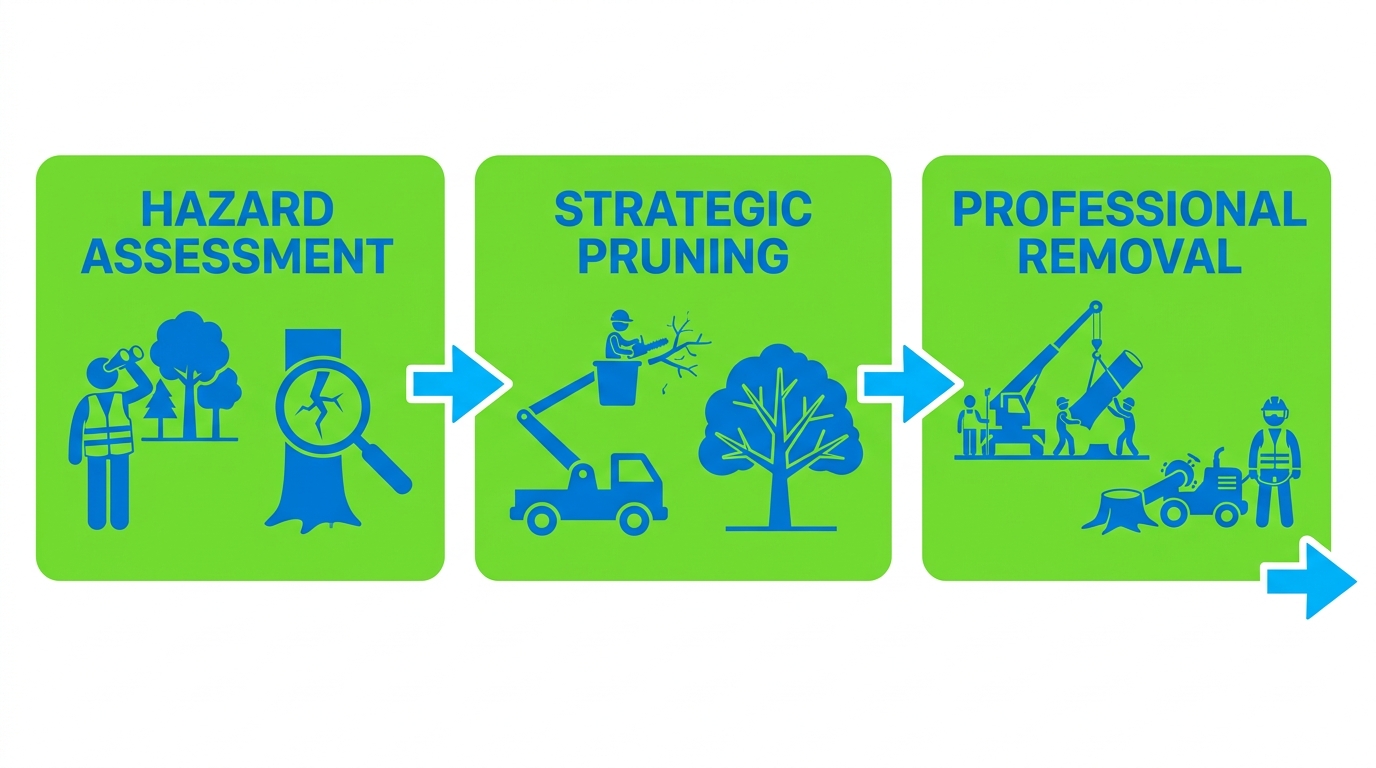
Prepare trees before hurricane season in three essential steps.
For long-term resilience, we also offer tree purchases and planting consultations featuring wind-resistant species like live oaks and Southern magnolias. As a fully licensed and insured, family-owned company with an A+ BBB rating, we’re ready to help homeowners across Shreveport, Bossier City, and the broader Northwest Louisiana region. Contact us today for a free hazard assessment before hurricane season arrives.
8. Hire an Arborist for Expert Tree Selection
Selecting the right trees for your property begins with expert advice. With over 40 years of local experience, our arborists help you choose wind resistant trees in Louisiana that withstand hurricane-force winds.
During a site visit, we evaluate soil type, sunlight, and available space to recommend species such as live oak and bald cypress — naturally resistant to high winds. Preparing for hurricane season with expert tree selection ensures your landscape stays secure. A hazard tree assessment by a qualified arborist can identify future risks from nearby trees before they become threats. This careful planning prevents costly errors like planting too close to foundations or in unsuitable soil.
Key advantages of our arborist-led approach:
- Species recommendations based on your site’s unique conditions
- Early hazard detection to protect your home during storms
As a local, family-owned and operated company that is fully licensed and insured with an A+ BBB rating, we take pride in guiding your tree selection. Contact Miller Tree Service today for a custom consultation with one of our ISA-certified arborists.
Building a Storm-Ready Landscape in Northwest Louisiana
Bringing it all together, preparing your property begins with selecting wind resistant trees louisiana arborists consistently recommend, such as Live Oak, Southern Magnolia, and Bald Cypress. Strategic pruning to thin dense canopies significantly reduces wind resistance and the risk of breakage. Our team combines this with a comprehensive hazard tree assessment to identify weak limbs, root damage, or unstable structures long before a storm threatens. As a local, family-owned company with an A+ rating with the BBB, we specialize in hurricane season tree preparation. Even the most resilient landscape can suffer damage, which is why our fully licensed and insured crews are ready for 24/7 emergency cleanup.
Contact our team to schedule a hazard tree assessment or to discuss your storm-ready landscape plan. With over 40 years serving Northwest Louisiana, we are your trusted partner for long-term resilience.
Resources